
Which are the best services for detecting PPC fraud?
Understanding PPC Fraud PPC fraud represents a significant threat to advertisers, as it involves the ...

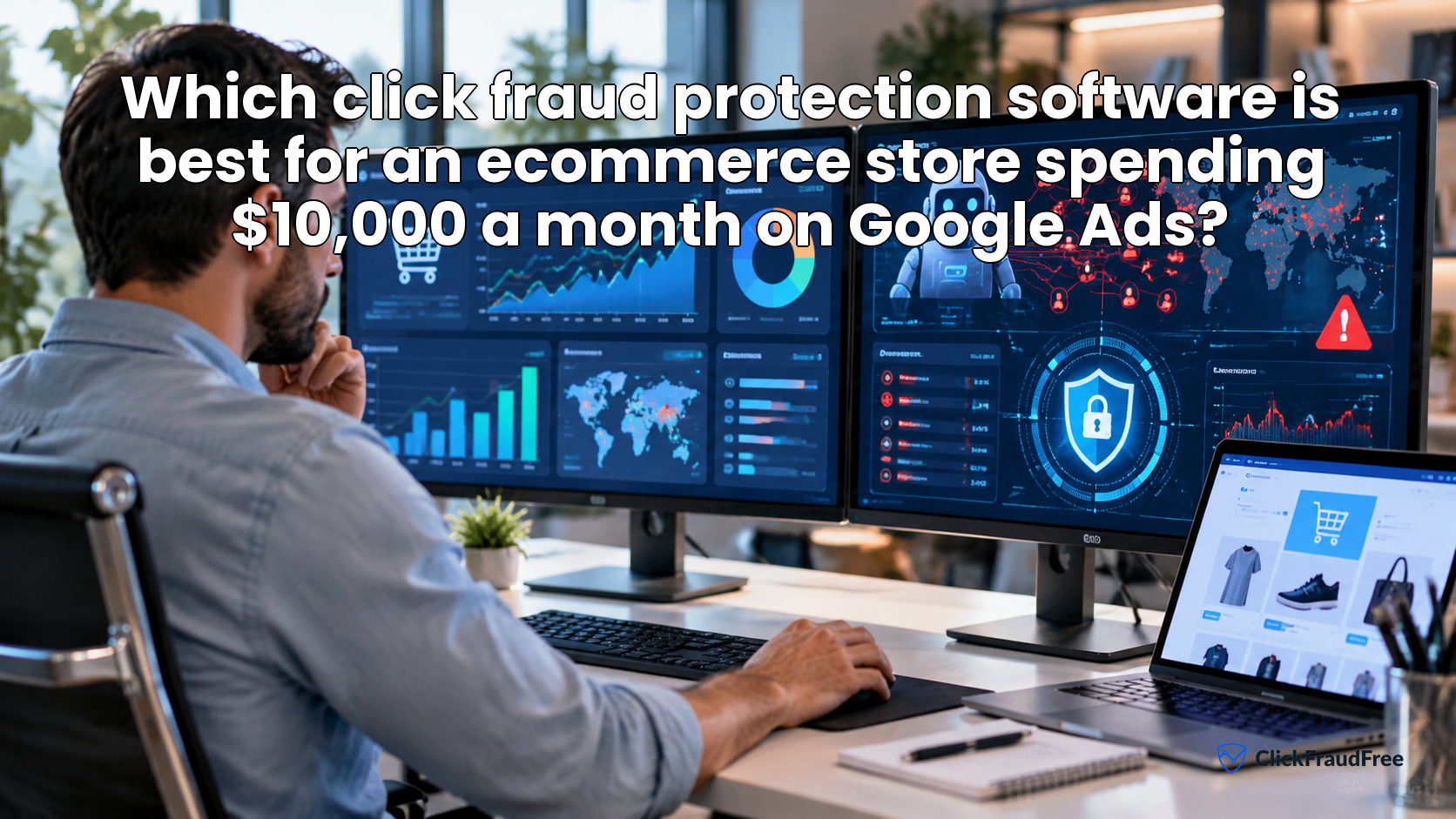
Running an ecommerce business with a monthly Google Ads budget of $10,000 requires careful control over advertising costs, traffic quality, and campaign performance. Every click should represent a genuine opportunity to attract a potential customer, generate a product sale, or increase revenue. However, not all advertising traffic comes from real shoppers. Invalid clicks generated by automated bots, click farms, competitors, and malicious users can consume valuable advertising budgets without producing meaningful engagement or conversions.
For online stores operating in competitive markets, even a relatively small amount of fraudulent activity can affect campaign profitability. When suspicious users repeatedly click product advertisements, Google Ads may charge for interactions that have little or no commercial value. This can reduce the budget available to reach genuine buyers, distort conversion statistics, and make it harder to identify which products, keywords, and campaigns are actually delivering profitable results. Implementing dedicated click fraud protection software for ecommerce helps businesses identify suspicious activity and reduce unnecessary advertising expenditure.
With a monthly advertising investment of $10,000, protecting every available advertising dollar becomes an important part of ecommerce management. Automated click fraud detection continuously analyzes visitor behavior, identifies unusual clicking patterns, and helps prevent repeat interactions from suspicious sources. Solutions such as ClickFraudFree provide automated protection designed to detect invalid traffic and help advertisers block suspicious IP addresses through Google Ads integration.
For ecommerce businesses investing $10,000 per month in Google Ads, click fraud protection is a practical component of a broader advertising security strategy. The right software helps maintain visibility into traffic quality while supporting more efficient campaign management and sustainable online growth.
Click fraud is a significant traffic quality challenge for ecommerce businesses that depend on paid advertising to attract customers. It occurs when advertisements receive clicks that do not represent genuine purchasing interest or legitimate customer activity. These interactions can come from automated bots, coordinated click farms, competitors repeatedly clicking advertisements, or suspicious users generating artificial engagement. For an online store spending $10,000 every month on Google Ads, this activity can create unnecessary costs and make advertising performance more difficult to measure accurately.
One of the main problems is that fraudulent clicks can consume campaign budgets without generating corresponding sales. For example, an ecommerce campaign promoting high-value products may receive repeated clicks from the same suspicious IP address or device, even when those visits show no meaningful shopping behavior. As advertising expenditure increases, identifying these patterns manually becomes increasingly difficult. Without effective click fraud detection and prevention software, businesses risk allocating part of their marketing budget to traffic that has little or no commercial value.
Click fraud can affect several important aspects of an online store’s advertising strategy. Beyond the immediate cost of individual clicks, suspicious interactions can complicate performance reporting and make campaign optimization less reliable. Understanding the most common sources of invalid traffic helps ecommerce managers recognize why automated monitoring is important.
Detecting suspicious activity quickly helps ecommerce businesses limit exposure before fraudulent patterns consume a larger portion of their advertising budget. ClickFraudFree uses behavior-based monitoring to analyze click frequency, device information, IP activity, and traffic anomalies. Its automated protection and Google Ads API integration help identify suspicious sources and apply IP exclusions, supporting more effective advertising budget management.
For stores investing $10,000 monthly, understanding where advertising clicks originate is essential for making informed marketing decisions. Combining accurate analytics with continuous click fraud protection helps businesses focus their spending on genuine shopping opportunities and improve the reliability of their advertising performance data.
Choosing the best click fraud protection software for an ecommerce store spending $10,000 per month on Google Ads requires evaluating more than basic suspicious click reporting. Online retailers need a solution capable of identifying invalid traffic, responding to emerging threats, and protecting advertising campaigns without creating unnecessary management work. The most effective platform should combine automated monitoring, behavioral analysis, reliable reporting, and seamless integration with advertising systems. These capabilities help businesses understand their traffic quality and make better decisions about where their marketing budget is being spent.
For ecommerce advertisers, real-time protection is particularly important because paid campaigns can generate hundreds or thousands of interactions every day. A suspicious traffic source that repeatedly targets product advertisements can consume a meaningful portion of the available budget if it remains undetected. Instead of relying exclusively on manual IP investigations, businesses should consider software that continuously evaluates visitor behavior and identifies unusual activity. Automated click fraud prevention makes it easier to maintain consistent protection across multiple campaigns, products, and advertising channels.
ClickFraudFree, developed by GalGom Solutions S.L., combines automated click monitoring, behavioral threat detection, and Google Ads API integration to help advertisers protect their marketing investments. Its approach is designed to identify suspicious IP addresses, malicious bots, click farms, and abnormal advertising interactions while providing useful fraud reporting. Continuous monitoring also reduces dependence on time-consuming manual traffic investigations.
When comparing ecommerce click fraud protection software, evaluate detection capabilities, integration options, reporting transparency, scalability, and pricing. The best solution is one that provides measurable protection without adding unnecessary complexity to campaign management. For an ecommerce store spending $10,000 monthly, investing in the right advertising security platform can help reduce invalid traffic exposure, improve budget efficiency, and support more reliable ROAS analysis.
Running an ecommerce store with a monthly Google Ads budget of $10,000 requires careful control over every advertising dollar. While paid search can generate valuable traffic, conversions, and sales, invalid clicks can gradually consume your budget without producing genuine business opportunities. Click fraud protection software helps identify and prevent this waste by detecting suspicious activity, malicious bots, click farms, and repeated clicks from potentially fraudulent sources. For online retailers investing heavily in customer acquisition, choosing the right protection platform can make a measurable difference to advertising efficiency and overall profitability.
ClickFraudFree provides automated click fraud detection and prevention designed to protect digital advertising campaigns around the clock. Developed by GalGom Solutions S.L., the platform combines behavioral analysis, suspicious IP detection, and Google Ads API integration to help advertisers identify potentially invalid traffic and automate IP exclusions. Instead of relying exclusively on manual campaign reviews, ecommerce businesses can monitor incoming advertising interactions and respond to suspicious patterns more efficiently. This approach helps marketing teams focus their budgets on attracting legitimate shoppers.
For a store spending $10,000 per month on Google Ads, even a relatively small proportion of invalid traffic can represent a significant financial loss. Effective protection should provide more than basic click monitoring; it should offer actionable insights and practical prevention capabilities.
When comparing the best click fraud protection software for ecommerce, consider detection accuracy, automation, integration capabilities, reporting transparency, and subscription costs. ClickFraudFree brings these capabilities together in a security-focused solution that helps online retailers protect their Google Ads investment and make more informed marketing decisions.
One of the most practical ways to reduce repeated invalid advertising interactions is through real-time IP blocking. When an ecommerce business invests approximately $10,000 every month in Google Ads, repeated clicks from suspicious sources can consume valuable budget that should be reaching potential customers. These interactions may originate from automated bots, click farms, competitors abusing advertising campaigns, or other sources displaying unusual behavior. Identifying suspicious IP addresses and preventing further unwanted interactions can help improve advertising budget efficiency.
ClickFraudFree uses automated monitoring and Google Ads API integration to help businesses identify suspicious traffic and implement IP exclusions. The platform analyzes advertising interactions to detect unusual click frequencies, repeated activity, device-related patterns, and other potential indicators of invalid traffic. When an IP address meets the configured detection criteria, the system can help automate the exclusion process, reducing the need for advertisers to investigate and update exclusion lists manually. This makes ongoing campaign protection more manageable for ecommerce teams and digital marketing agencies.
Real-time monitoring and automated IP exclusion workflows can support several important advertising security objectives:
It is important to understand that IP blocking has limitations. Shared networks, dynamic IP addresses, VPNs, and changing devices can complicate identification, while not every repeated click represents fraud. Effective Google Ads click fraud protection should therefore combine IP intelligence with behavioral analysis and regularly reviewed detection rules. For ecommerce businesses spending $10,000 monthly, this balanced approach can provide an additional layer of advertising security while helping preserve opportunities to reach legitimate shoppers.
Not every click recorded in a Google Ads campaign represents a genuine shopping opportunity. Ecommerce businesses can receive advertising interactions generated by automated bots, click farms, suspicious networks, and potentially abusive competitor activity. For an online store spending $10,000 per month on paid search, overlooking these patterns can result in unnecessary advertising expenditure and misleading campaign performance data. Detecting malicious bots and suspicious traffic is therefore an important part of maintaining an efficient digital advertising strategy.
ClickFraudFree helps advertisers identify potentially fraudulent activity through automated, behavior-based traffic analysis. Rather than evaluating individual clicks in isolation, the platform monitors several indicators, including click frequency, device characteristics, repeated interactions, suspicious IP addresses, and unusual traffic behavior. Combining these signals makes it easier to identify patterns that may indicate automated activity or intentional advertising abuse. The objective is to distinguish legitimate customer engagement from interactions that deserve further investigation or preventive action.
Understanding the warning signs of click fraud helps marketing professionals make better decisions about campaign security. Some of the most relevant indicators include:
With ClickFraudFree, ecommerce businesses can monitor these indicators, review suspicious activity through comprehensive reporting, and use automated Google Ads IP exclusions to help prevent repeated unwanted interactions. This provides greater visibility into traffic quality and supports more informed campaign optimization decisions. When selecting click fraud protection software for ecommerce, prioritize solutions that combine continuous monitoring, behavioral detection, automated prevention, and transparent reporting. Protecting a $10,000 monthly advertising budget starts with understanding where clicks originate and whether they represent genuine commercial opportunities.
Running an ecommerce store with a $10,000 monthly Google Ads budget requires careful control over every advertising dollar. Invalid clicks, automated bots, competitor click abuse, and suspicious traffic can consume paid advertising budgets without generating genuine customers or sales. Choosing the best click fraud protection software for ecommerce helps businesses identify potentially fraudulent activity, reduce avoidable advertising waste, and focus spending on visitors with real purchasing intent. However, not every click fraud detection platform offers the same level of protection, automation, or reporting, making it essential to compare solutions against your store’s specific requirements.
Start by evaluating detection accuracy, monitoring frequency, integration capabilities, and the provider’s approach to suspicious traffic. Effective software should analyze behavioral patterns, including repeated clicks, unusual click frequencies, suspicious IP addresses, device characteristics, and traffic anomalies. For ecommerce advertisers, real-time click fraud detection is particularly valuable because it can help identify threats while campaigns are active rather than relying exclusively on retrospective reports. Look for automated Google Ads integration that supports IP exclusions, allowing eligible suspicious sources to be blocked without requiring constant manual intervention. Transparent dashboards and detailed fraud reports also make it easier to distinguish potentially invalid activity from legitimate customer behavior.
For a store spending $10,000 monthly, prioritize software that explains how suspicious activity is identified and how protective actions affect campaign traffic. ClickFraudFree offers automated click protection, behavior-based threat detection, Google Ads API integration, and fraud reporting to help advertisers manage these risks. Before committing, evaluate the platform against your current traffic patterns, conversion data, and reporting needs. A short trial or measured pilot can help establish whether the software provides practical value for your advertising operation.
For an ecommerce business investing $10,000 per month in Google Ads, click fraud protection should be evaluated as a measurable investment rather than an additional software expense. Invalid traffic can inflate click costs, consume campaign budgets, and make performance data harder to interpret. However, not every expensive click or visitor who leaves without purchasing represents fraud. The real objective is to identify potentially invalid activity, reduce avoidable losses where possible, and improve the quality of the information used to make advertising decisions. Calculating the return on investment (ROI) of click fraud prevention provides a practical framework for determining whether a protection platform justifies its subscription cost.
Begin by establishing a baseline using your existing advertising and ecommerce analytics. Record monthly ad spend, conversion rate, cost per acquisition, revenue, and any available evidence of suspicious traffic. Then compare these metrics over a suitable period after introducing click fraud protection, accounting for changes in seasonality, campaign targeting, bidding strategies, and product demand. Estimate the financial benefit attributable to verified or credibly identified invalid traffic that the software helps prevent, while avoiding assumptions that every flagged click would otherwise have produced a sale. Click fraud detection can improve decision-making, but its financial impact depends on actual traffic quality, campaign settings, and the effectiveness of protective actions.
A useful starting formula is:
ROI (%) = [(Estimated Financial Benefits − Total Protection Costs) ÷ Total Protection Costs] × 100
For example, suppose your store spends $10,000 monthly on Google Ads and pays $100 per month for protection. If a carefully measured evaluation estimates that the software prevents $300 in otherwise avoidable advertising losses, the estimated net benefit is $200 per month and the ROI is 200%. These figures are illustrative, not a prediction of typical results or a guarantee of recovered advertising spend. The calculation should include subscription fees and any meaningful implementation or management costs, while avoiding double-counting benefits such as prevented losses and attributed revenue improvements.
ClickFraudFree provides click monitoring and fraud reporting to help advertisers investigate suspicious activity and assess protection performance. For ecommerce stores, the strongest investment case comes from documented evidence, transparent costs, and consistent measurement rather than headline percentages alone. Review results regularly to determine whether protection is helping your business make more efficient use of its advertising budget.
Effective click fraud prevention for Google Ads requires more than identifying suspicious traffic after advertising money has already been spent. Ecommerce stores need a monitoring process that can detect unusual activity, help advertisers investigate potential threats, and support timely protective measures across active campaigns. When a business invests $10,000 per month in paid search, delays in identifying repeated suspicious clicks can make budget management more difficult. Integrating click fraud protection software with Google Ads can help streamline monitoring, reduce manual administration, and provide clearer visibility into traffic quality. The ideal setup combines automated detection with appropriate account permissions, sensible exclusion policies, and regular performance reviews.
Begin by selecting a platform that supports the relevant Google Ads integration and clearly explains its authorization requirements. For example, ClickFraudFree provides Google Ads API integration designed to support automated IP exclusions, alongside behavior-based monitoring and fraud reporting. After connecting an account, review the campaigns included in monitoring and confirm that the integration has the permissions required for its intended functions. Examine how the platform identifies suspicious patterns, including repeated clicks, unusual device behavior, high-frequency activity, and potentially malicious traffic sources. Before enabling automatic exclusions, understand the platform’s detection criteria, exclusion rules, and limitations so legitimate customers are not unnecessarily blocked.
Continuous protection is a process rather than a one-time configuration. Schedule regular checks to confirm that the integration remains authorized, monitoring is active, and automated actions are functioning as expected. Remember that IP exclusions have limitations: shared networks, changing IP addresses, and other traffic patterns can make individual visitors difficult to identify reliably. Google Ads also applies its own invalid traffic systems, so third-party protection should complement, not replace, Google’s existing safeguards. Review account security, access permissions, data handling, and relevant GDPR obligations when managing customer-related information.
By combining automated monitoring with human oversight, ecommerce advertisers can respond more systematically to suspicious traffic while preserving access for legitimate shoppers. ClickFraudFree helps businesses monitor potential click fraud, automate supported protective workflows, and analyze suspicious activity through centralized reporting. For a store spending $10,000 monthly, this integration can create a more consistent approach to advertising security and budget oversight, with results evaluated through measured traffic quality, campaign performance, and documented operational improvements.
Running an ecommerce store with a monthly Google Ads budget of $10,000 requires careful control over advertising costs, campaign performance, and conversion efficiency. Every click should have a genuine opportunity to generate a sale, but invalid traffic, automated bots, click farms, and competitor click abuse can consume a significant portion of your advertising budget without delivering any commercial value. Choosing the right click fraud protection software for ecommerce helps identify suspicious interactions, reduce wasted ad spend, and protect the return on investment (ROI) of your paid advertising campaigns. Rather than focusing exclusively on the number of clicks blocked, ecommerce businesses should evaluate how effectively a solution identifies fraudulent activity while preserving legitimate customer traffic.
When comparing click fraud protection solutions, prioritize automated monitoring, accurate threat detection, and seamless integration with Google Ads. A platform should analyze important behavioral signals, including IP addresses, device information, click frequency, geographical patterns, and unusual traffic activity. For an online store spending $10,000 monthly, even a small percentage of invalid traffic can represent meaningful financial losses. For example, if 10% of the advertising budget is consumed by suspicious clicks, that represents $1,000 in potentially wasted monthly expenditure. This is an illustrative scenario rather than a guaranteed recovery figure, but it demonstrates why continuous advertising protection deserves attention.
The right solution should offer more than basic IP monitoring. Look for a comprehensive platform capable of identifying evolving fraud patterns and automatically responding to suspicious activity.
Price should not be the only deciding factor when selecting a click fraud prevention service. Compare the subscription cost with the potential financial impact of invalid traffic, the time saved through automation, and improvements in campaign efficiency. For an ecommerce business spending $10,000 per month, a protection solution should provide measurable reporting that helps determine whether its cost is justified. Review performance over several weeks, compare suspicious traffic patterns before and after implementation, and evaluate whether legitimate clicks and conversions remain unaffected.
Why ClickFraudFree Is Worth Considering
ClickFraudFree, developed by GalGom Solutions S.L., provides automated click fraud detection and prevention designed to protect digital advertising budgets. Its technology combines real-time traffic monitoring, behavior-based threat detection, suspicious IP identification, and Google Ads API integration for automated IP exclusions. Ecommerce businesses can use these capabilities to identify potentially malicious bots, click farms, repeated competitor clicks, and other abnormal advertising interactions. With continuous 24/7 monitoring and comprehensive reporting, ClickFraudFree helps advertisers gain greater visibility into their traffic quality and make more informed campaign decisions. For online stores investing $10,000 monthly in Google Ads, selecting a solution with these capabilities can be an important step toward reducing advertising waste and maintaining a more efficient, secure, and profitable PPC strategy.

Understanding PPC Fraud PPC fraud represents a significant threat to advertisers, as it involves the ...
Ensuring Reliable Campaign Performance with Innovative Click Fraud Solutions from ClickFraudFree In the increasingly competitive ...

Understanding Click Fraud Click fraud is a deceptive practice that involves fraudulent clicks on online ...

Losing Ad Dollars to Bots? ClickFraudFree Is the Fix You Need Click fraud is more ...
Empowering Advertisers to Maximize ROI and Eliminate Fake Clicks with the Advanced Protection of ClickFraudFree ...

How does click fraud detection benefit digital advertising campaigns? Digital advertising has evolved into one ...

What Tools Are Recommended for Preventing Click Fraud in Google Ads Campaigns? Google Ads remains ...

Understanding Click Fraud and Its Impact Click fraud is a deceptive practice that significantly impacts ...

Making Sure Every Ad Dollar Counts – Fighting Click Fraud with ClickFraudFree In the ...

Understanding Click Fraud in PPC Campaigns Click fraud is a pervasive issue in the realm ...

Understanding the Laws Surrounding Click Fraud with ClickFraudFree In the ever-evolving digital advertising landscape, the ...
How Does Click Fraud Affect Digital Advertising Campaigns? Click fraud is one of the most ...

What Measures Are Most Effective for Preventing Click Fraud in Digital Advertising? Digital advertising continues to be a cornerstone of modern marketing strategies, offering precision

A Comprehensive Guide to Click Fraud Prevention In the relentless pace of the digital advertising domain, where businesses allocate substantial resources to online campaigns, a

The Importance of Real-Time Analysis in Click Fraud Prevention Within the ever-evolving landscape of digital advertising, the persistent challenge of click fraud has become a

Start WhatsApp